Native Plants Home
Welcome to GSWA’s Plant for Pollinators Program!
Get email updates on the 2026 Plant for Pollinators Program
To ensure you don’t miss any updates, make sure you’re on our Native Plant Mailing List. Subscribers receive vital program details, including webinar reminders, helpful gardening tips, pickup instructions, as well as volunteer opportunities. Don’t miss out—CLICK HERE to join or update your subscription!
2026 Plant Ordering Process
We’re keeping it simple! This year, you’ll enjoy the same user-friendly ordering platform as last year. You’ll be able to browse, purchase, and plan with ease—whether you’re ordering Garden Kits, Individual Species, or additional Native Plant Program items. For specific questions about plants or garden designs, reach out to us at plantsale@greatswamp.org. For technical inquiries, please contact nrago@greatswamp.org.
Ordering Process for 2026
Step 1: Explore the Native Plants Catalog
- Option 1: Use the Downloadable 2026 Interactive Native Plant Catalog for detailed searches right from your desktop.
- Option 2: Use the Online Native Plants Overview, which is fully mobile-friendly and accessible on your smartphone or desktop.
Step 2: Plan Your Native Garden
- Plan ahead by selecting the plants you want to order and choosing your preferred 2026 Pickup Location. To stay organized, use our Printable Planning List—it’s designed to help you map out both Garden Kits and Individual Species for a thriving, well-structured landscape.
Important Pickup Location Details to Know:
-
-
If your town’s scheduled pickup dates and times don’t work for you, below are two options to consider when completing your order during the Native Plant Sale checkout process, which opens on April 1 at noon.
PREFERRED – Select the desired town from our list of 2026 Pickup Locations and have a family member or friend pick up your order on your behalf. Just be sure to give them a copy of your order confirmation email, which you’ll receive upon completing your order. This confirmation will help our native plant partners with on-site organization and expedite your pickup process.
ALTERNATE – Select GSWA HQ as your pickup location. Once you receive your order confirmation email, forward it to nrago@greatswamp.org along with your preferred pickup date and time between Monday, May 4, and Friday, May 8, from 9 AM to 5 PM. If you need a time outside of office hours, just let us know—we’ll do our best to accommodate! We keep track of all special requests and store orders in a deer-proof area to keep your plants safe. -
Pickup Location Changes: Unexpected pickup location changes can only be made under special circumstances and must be moved to GSWA HQ. Requests to modify pickup locations to GSWA HQ must be submitted by the close of business on Wednesday, April 22, by forwarding your confirmation email to nrago@greatswamp.org along with your preferred pickup date and time between Monday, May 4, and Friday, May 8, from 9 AM to 5 PM.
-
Orders not picked up by Friday, May 8, may be forfeited without a refund. Please do your best to pick up your order at your selected location on the assigned date and time.
-
Step 3: Place Your Native Plant Order
- Starting April 1 at noon, 12:00 PM, CLICK HERE to access the Plant Sale Order Form to complete your plant order and select one of the 2026 Pickup Locations, Important: It is mandatory to choose one of the 17 designated partner-operated locations. See above if you have issues or questions. If you run into any issues, use the Order Form Directions for a step-by-step walkthrough.
Consider a Plant It Forward! Donation! Help GSWA staff spread the joy of native plants to schools throughout the Passaic River watershed by adding a tax-deductible donation of $30, $50, $100, or $250. (See Full Description or add your order through the Additional Items section.)
- Plant Sale Ordering Ends on April 21 at 5:00 PM.
Step 4: Pickup Your Plants
- Mark your calendar! Pick up your plant order at your chosen location on May 2/3, 2026 during their designated times. NOTE: Once you submit a pickup location, changes can only be made for special circumstances and moved to the GSWA HQ pickup location. Please see the above instructions.
Garden Kit Manuals
Each of the six garden kits comes with a garden owner’s manual packed with guidance on your new pollinator garden, complete with sample planting designs, seasonal maintenance schedules, pollinator information, and more. Download the manuals early to help you prepare your garden.
- Dry Shade Manual (Separate PDF)
- Hell Strip Kit Manual (Separate PDF)
- Moist Shade Kit Manual (Separate PDF)
- Rain Garden Kit Manual (Separate PDF)
- Sunny Meadow Kit Manual (Separate PDF)
Why Native Plants Matter
The Plant for Pollinators Program goes beyond cultivating beautiful gardens—it’s about restoring life to our ecosystems. By planting native species, you’re creating essential habitats for pollinators and birds, strengthening the web of life that sustains our local environment. Together, we can transform our backyards into what acclaimed entomologist Doug Tallamy envisions as a “Homegrown National Park™”—one garden at a time.
Finding the right native plants for your garden can feel challenging. That’s why we simplify the process by offering a curated selection of plants specifically suited to our local soils and climate.
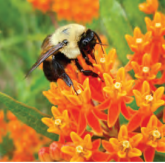
But why are native plants so critical compared to exotic or non-native varieties? While non-native plants may produce seeds or berries consumed by wildlife, they often lack the full nutritional value animals need to thrive. Pollinators and other wildlife evolved alongside native plants, relying on them for food, habitat, and reproduction throughout their life cycles. For instance, pollinator insects depend on native plants not only for nectar and pollen but also as hosts for laying eggs and feeding larvae. Many species, like the monarch butterfly, are entirely dependent on specific plants—milkweed, in their case—for survival.
This connection ripples across the ecosystem. Healthy insect populations form the foundation of the food web, supplying birds and other wildlife with the protein-rich diet they need to reproduce. Research even shows that areas require at least 70% native vegetation to support species like chickadees. Without native plants, our ecosystems simply cannot sustain themselves.
This program works because we’re all in it together—the Great Swamp Watershed Association, 28 local towns, community organizations, and people like you. When we collaborate, we create real change. So if you’re ready to build a greener, healthier future, join us today!