By Ginger Van Ryzin, Manager of Stewardship and GIS Specialist
When the word pollution comes up in conversation, we often think of poisoned rivers, hazy skies from car emissions, or plastics littering our beaches and oceans. Often, one of the most preventable types of pollution, light pollution, does not come to mind. Sandwiched between New York City and Philadelphia, light pollution bleeds into every corner of New Jersey, with most people fully unaware.
Darkness is critical for nocturnal animals, who have evolved to function best at a time that many do not. Bats use echolocation, bouncing sound waves throughout the night to locate objects and, most importantly, their prey. Unlike human eyes that evolved with great detailed vision in the daylight, owl eyes are adapted for dark conditions due to a higher ratio of rods (photoreceptor cells that are active in lowlight conditions) than cones (photoreceptor cells responsible for color and detailed vision that require light) when compared to the human eye. Even the prey of an owl, a mouse, has long whiskers to detect items that might be in its path.
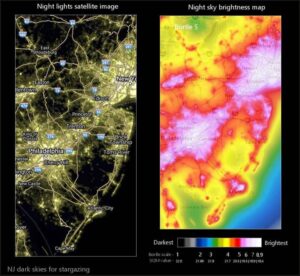
Figure 1. Light pollution in NJ. Source: go-astronomy.com
Due to our poor night-vision, humans tend to fear the dark, since nocturnal wildlife is much better adapted and leaves us in a potentially vulnerable position at nighttime. Although here in New Jersey we do not have dangerous predators stalking our nightly walk, other than the occasional black bear looking for food scraps, our early ancestors had prehistoric predators like saber-toothed cats or giant hyenas threatening their tribe each night. Luckily, roughly one million years ago early humans began to master fire; providing warmth, protection, and sight at night. Fast forward to today, we light up the streets and parking lots so we can see the road ahead of us, we light our homes so we can stay up past sunset, and we even light up entire sports fields so that the sun doesn’t curtail the sports season, all while areas hidden by artificial light, like our 73-acre Conservation Management Area (CMA) in Harding Township, are closed from dusk to dawn.
How we measure light pollution
The brightness of the night sky is rated on the Bortle Scale, which ranges from 1-9 of darkness to light, respectively. A rating of 1-2 on the Bortle Scale means the Milky Way is fully visible and clear, with clouds dark and appearing as holes in the star-covered sky, while a rating of 8-9 is city sky, where stars are barely visible or invisible and the sky color is gray to orange. Newark, Paterson and of course New York City are all rated at 9, while even the most rural places in New Jersey like the Delaware Water Gap rates a 4.5, meaning the Milky Way is present but light pollution can still be seen along the horizon. At our Conservation Management Area in the heart of Morris County, the Bortle Scale is 6.7, so the Milky Way is faintly visible on only the clearest of nights and the clouds are bright from the surrounding light pollution.
The Bortle Scale is used to inform astronomers of the best locations for stargazing, rating how visible galaxies and constellations are on a clear night; however, areas with high ratings like cities can also affect human health. Studies have shown that excess exposure to artificial light can put one at increased risk of depression, type 2 diabetes (this link is primarily explained by the disruption of the body’s natural circadian rhythm), and more. Natural darkness is critical for our bodies’ much-needed time to recover from the day, but when streetlights bathe bedrooms in light it can be difficult to have restful sleep.
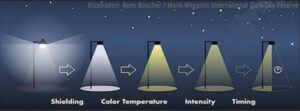
Figure 2. Night sky friendly lighting. Source: hillcountryalliance.org
Humans are not the only ones impacted by artificial light. Nocturnal animals, the ones specially adapted to perform best in the dark, do not have the same upper hand on their prey when the hunting grounds are flooded in light. Moths, sea turtles and other wildlife use the moon to navigate, but with artificial lighting they see many smaller moons, leading to disorientation and sometimes death. Even plants need darkness – studies have shown that exposure to artificial light can cause deciduous trees to retain their leaves sometimes much later into the fall. Night-blooming plants, like evening primrose, are experiencing lower pollination rates since those moths and other pollinators can’t find their way through the myriads of moons.
Like most pollution, the problem is everywhere. But luckily, unlike unrestrained carbon emissions or the omni-present plastics littering our waterways, light pollution can be stopped by each of us flipping a switch. Limiting outdoor lighting, using motion sensors, and changing the light fixtures to aim towards the ground instead of the sky can help stop disrupting plants and nocturnal animals. In your home, use less lights when possible and switch to warm-toned lights can help your own body’s circadian rhythm stay in tune. Each outdoor floodlight turned off, each light fixture changed, every blue-toned light swapped to amber color can all add up to not only a healthier ecosystem, but also a healthier lifestyle.
Dark Skies Event Hosted by Environmental Commissions of Morris Township and Madison

Visit DarkSky New Jersey Facebook page. for more local information.
Morris Township and Madison Borough hosted a successful “Dark Skies” community event on Monday, August 18, featuring Steve Mariconda, a NJ representative for Dark Sky International. Attendees included representatives from numerous northern New Jersey towns and various local boards and commissions, fostering interest in regional change to combat light pollution.
The event addressed how light pollution is stealing our stars – disrupting ecosystems and having adverse health effects on both wildlife and humans; and, offered solutions for municipalities and residents. Simple changes for individuals include switching to yellow-toned bulbs instead of bright white LEDs, installing motion sensors for outdoor lights, and eliminating the uplighting of houses and trees, which creates sky glow.
The event promoted the adoption of Dark Sky Ordinances and best practices for lighting to reduce light pollution. It also demonstrated a strong, collective interest in addressing light pollution across northern New Jersey.
Watch the video here or view the presentation here
To get involved, contact local officials: Share your support for reducing light pollution with your local municipal officials and elected representatives.